
The Molecular Science of Allulose Powder (D-Psicose)
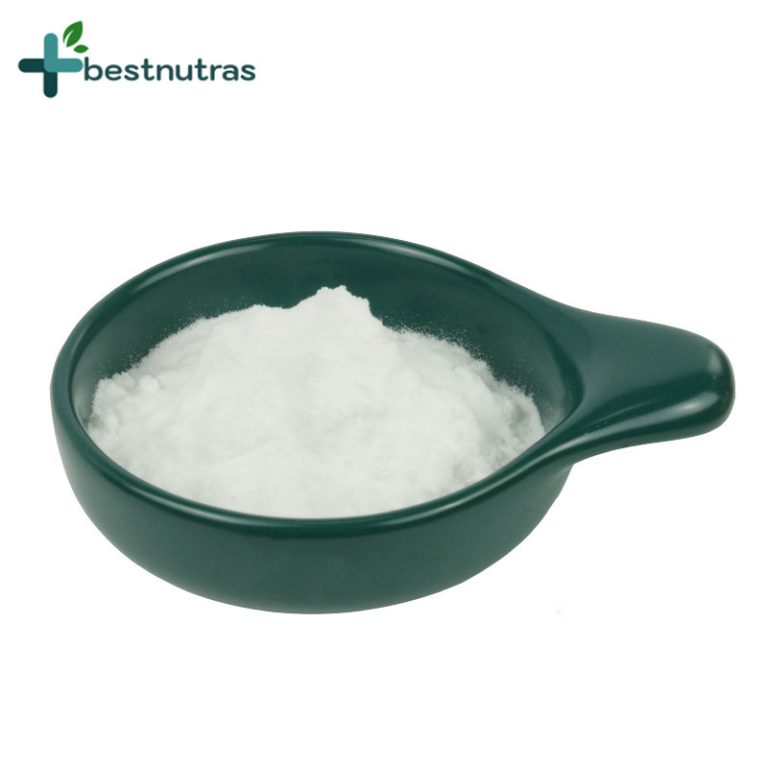
Allulose Powder, chemically recognized as D-psicose (a C-3 epimer of D-fructose), is a rare monosaccharide that occurs naturally in minute quantities within specific agricultural substrates such as figs, raisins, jackfruit, and maple syrup. With the molecular formula C₆H₁₂O₆ and a molecular weight of 180.16 g/mol, crystalline Allulose provides approximately 70% of the relative sweetness of sucrose while delivering an exceptionally low caloric density of merely 0.2 kcal/g (compared to sucrose's 4.0 kcal/g).
For industrial food technologists and R&D formulators, Allulose Powder represents a paradigm shift in sugar-reduction architecture. Unlike high-intensity artificial sweeteners (such as aspartame or sucralose) or polyols (such as erythritol or maltitol), Allulose behaves identically to sucrose in physical systems. It undergoes authentic Maillard browning reactions, exhibits identical freezing point depression characteristics, contributes to mouthfeel, and crystallizes under standard manufacturing parameters.
At KNH Biotech Co., Ltd., our commercial Allulose Powder is produced through precision bio-enzymatic transformation of non-GMO corn starch. By employing high-selectivity D-tagatose 3-epimerase / D-psicose 3-epimerase enzymes followed by advanced chromatographic separation and crystallization, we achieve a batch-to-batch chemical purity exceeding 99.0%.
Key Information Gain for Formulators: Metabolic Path & Glycemic Neutrality
Human clinical trials demonstrate that up to 70% to 80% of ingested Allulose Powder is rapidly absorbed in the small intestine via passive transport before being excreted unchanged through the urinary tract. The remaining fraction passes unfermented through the large intestine, causing minimal gastrointestinal distress compared to sugar alcohols. Because it does not participate in hepatic glycolysis or stimulate pancreatic beta-cells, Allulose maintains a Glycemic Index (GI) of 0 and a Glycemic Load (GL) of 0, making it the premier functional sugar replacement for ketogenic, diabetic, and clinical nutrition products.
Commercial Specifications & Quality Parameters
KNH Biotech Co., Ltd. enforces strict analytical testing on every batch of Allulose Powder utilizing High-Performance Liquid Chromatography (HPLC), Gas Chromatography-Mass Spectrometry (GC-MS), and Inductively Coupled Plasma Mass Spectrometry (ICP-MS).
| Analytical Parameter | Commercial Grade Specification | Test Method | KNH Biotech Standard Batch Quality |
|---|---|---|---|
| Assay (D-Psicose Content) | ≥ 98.5% (Dry Basis) | HPLC (RI Detector) | 99.3% – 99.7% |
| Appearance & Form | White Crystalline Powder | Organoleptic / Visual | Conforms (Pure White Crystals) |
| Loss on Drying (Moisture) | ≤ 1.0% | GB 5009.3 / Vacuum Oven | 0.25% – 0.40% |
| Specific Optical Rotation [α]D20 | +2.5° to +4.5° | Polarimetry | +3.2° |
| Ignition Residue (Ash) | ≤ 0.1% | Gravimetric (800°C) | 0.03% |
| Particle Size Distribution | 30 Mesh / 60 Mesh / 100 Mesh Micronized | Sieve Analysis | Customized per order specification |
| pH Value (10% Solution) | 4.5 – 6.5 | Potentiometric pH Meter | 5.4 |
| Heavy Metals (as Pb) | ≤ 5.0 mg/kg | ICP-MS | < 0.5 mg/kg |
| Lead (Pb) / Arsenic (As) | Pb ≤ 0.5 ppm | As ≤ 0.5 ppm | ICP-MS | Pb < 0.1 ppm | As < 0.05 ppm |
| Total Plate Count | ≤ 1000 CFU/g | ISO 4833-1 | < 100 CFU/g |
| Yeast & Mold | ≤ 100 CFU/g | ISO 21527-2 | < 10 CFU/g |
| Pathogens (Salmonella, E. coli) | Negative / 25g | PCR / Culture Method | Absent |
Product Recommendations & Formulation Versatility
Because Allulose Powder matches the physical functionality of traditional sucrose, global food manufacturers integrate KNH Biotech's crystalline and micronized grades across diverse product vectors.
1. Bakery & Confectionery
Allulose Powder caramelizes at temperatures similar to sucrose, enabling identical golden-brown crust color, soft crumb structure, and moisture retention in keto bread, cookies, cakes, and protein bars without introducing synthetic aftertastes.
2. Frozen Dairy & Ice Cream
Exhibiting a molecular weight identical to fructose, Allulose provides superior freezing point depression ($1.9\times$ greater than sucrose). This suppresses ice crystal growth, producing ultra-creamy low-calorie ice creams and sorbets.
3. Functional Beverages
Dissolving cleanly at 20°C with high solubility ($70\text{g}/100\text{g } \text{H}_2\text{O}$), Allulose Powder adds authentic sugar body and mouthfeel to RTD tea, energy drinks, and flavored sparkling waters without cloudiness or sediment.
4. Dietary Supplements & Gummies
Used widely as a premium binder and sweetening agent in pectin and gelatin gummies, low-GI syrups, and nutraceutical powder mixes. It avoids tooth decay and supports oral microbiota health.
Global Allulose Procurement Trends & Market Development (2025–2030)
The global sugar alternative market is undergoing a seismic migration from legacy polyols and first-generation botanical extracts toward rare sugar monosaccharides. According to market intelligence data, the global Allulose market is projected to expand at a compound annual growth rate (CAGR) exceeding 17.4% between 2025 and 2030, driven by key macro factors:
- US FDA Labeling Advantage: The US Food and Drug Administration's guidance allowing Allulose to be excluded from "Total Sugars" and "Added Sugars" on Nutrition Facts panels has unlocked massive product redesigns across North American CPG brands.
- EFSA & UK Novel Food Authorizations: Anticipated approval of Allulose under European Food Safety Authority (EFSA) and UK FSA Novel Food dossiers will unleash massive European B2B demand, prompting global procurement teams to secure long-term supply agreements.
- Enzymatic Conversion Efficiency Gains: Technological advancements in immobilized enzyme reactors have reduced production costs by over 35% over the past five years, narrowing the price gap between Allulose and Erythritol.
- Clean Label & Non-GMO Sourcing: Global brands are increasingly rejecting synthetic high-intensity sweeteners in favor of non-GMO enzymatic starch-derived D-Psicose backed by complete traceability documentation.
Frequently Asked Questions (FAQ) for Global Allulose Procurement
Direct answers to complex technical, regulatory, and supply chain queries submitted by international procurement leaders and food formulation engineers.
Q1: How does Allulose Powder compare directly to Erythritol, Stevia, and Monk Fruit in commercial food formulations?
Allulose Powder offers physical sugar performance that Stevia and Monk Fruit cannot match, such as bulking, browning, and freezing point depression. Compared to Erythritol, Allulose has no intense cooling sensation (endothermic heat of solution is significantly lower), does not re-crystallize as aggressively in high-concentration liquids, browns via the Maillard reaction, and exhibits superior GI tolerance without polyol-induced osmotic laxative effects.
Q2: What is the current global regulatory status of Allulose Powder in the US, Europe, Asia, and Latin America?
In the United States, Allulose holds FDA Generally Recognized As Safe (GRAS) status (GRN No. 400, 498, 693, 1076) and is excluded from "Added Sugars" and "Total Sugars" labeling. It is approved in Japan, South Korea, Mexico, Chile, Colombia, and Singapore. In Europe and the UK, Allulose is undergoing evaluation under Novel Food Regulation (EU) 2015/2283. KNH Biotech provides complete regulatory dossier support for international market registration.
Q3: What enzymatic conversion pathway is used by KNH Biotech, and does the final powder contain residual enzymes or recombinant DNA?
KNH Biotech utilizes non-GMO D-psicose 3-epimerase produced via food-grade fermentation to biotransform pure starch-derived D-fructose into D-psicose. Following enzymatic conversion, the solution undergoes ultrafiltration, activated carbon decolorization, ion-exchange demineralization, microfiltration, and vacuum crystallization. The final crystalline Allulose Powder contains zero residual active enzyme, zero recombinant DNA, and passes full PCR enzyme residue screening.
Q4: What are the shelf-life stability, hygroscopicity, and bulk storage requirements for Allulose Powder?
Allulose Powder has a shelf life of 24 months from the date of manufacture when stored in unopened original packaging. It is mildly hygroscopic compared to sucrose. Bulk inventory should be stored in a cool, dry warehouse below 25°C (77°F) and relative humidity (RH) below 60%. KNH Biotech packages bulk orders in multi-layer kraft paper bags lined with food-grade double PE liners (25 kg/bag) or 500 kg super-sacks with desiccant protection.
Q5: Can KNH Biotech customize particle mesh sizes, moisture control, and private label packaging?
Yes. KNH Biotech operates advanced mechanical sifting and air-classifier milling machinery. We offer standard crystalline 30-mesh, fine 60-mesh, and ultra-fine micronized 100-mesh Allulose Powder for specialized applications like chocolate manufacturing and dry beverage mixes. We also provide OEM private label packaging, custom sweetener premixes (e.g., Allulose + Monk Fruit / Stevia blends), retail pouch filling, and bulk drum packaging.
Q6: What is KNH Biotech's Minimum Order Quantity (MOQ), lead time, and supply stability for bulk exports?
Our standard Minimum Order Quantity (MOQ) for commercial Allulose Powder starts at 100 kg for sample trial batches, with full containerload (FCL) volume discounts at 10 to 20 metric tons. Standard production and dispatch lead times are 7 to 12 business days. With a annual production capacity exceeding 5,000 metric tons, KNH Biotech ensures consistent year-round supply stability for enterprise contracts.
Why Partner with KNH Biotech Co., Ltd. for Allulose Powder Supply
Established in 2010, KNH Biotech Co., Ltd. has established itself as an international benchmark in functional ingredient R&D, bio-enzymatic extraction, and high-purity sweetener synthesis. Our state-of-the-art manufacturing campus operates under strict CGMP and ISO 22000 management protocols, featuring fully automated cleanrooms and analytical testing centers.
We provide full transparency and technical rigor across every transaction:
- Batch-Specific Documentation: Every shipment is accompanied by a comprehensive Certificate of Analysis (CoA), SDS, Non-GMO Statement, Allergen Free Certificate, and Heavy Metal / Pesticide Residue Test Reports.
- Global Regulatory Compliance: Certified Kosher, Halal, USDA Organic, ISO 22000, and CGMP compliant to ensure smooth customs clearance across North America, Europe, Asia, and the Middle East.
- Custom Formulation & OEM Services: Full OEM/ODM capabilities for custom mesh sizes, low-dust granulations, and pre-blended functional sweetener matrix formulations tailored to client specifications.
- Dedicated B2B Support: Technical application specialists available to assist your formulation engineers with solubilization dynamics, Maillard browning control, and sensory optimization.
Request Bulk Allulose Powder Samples & Wholesale Pricing
Speak directly with our technical sales engineers to receive batch CoAs, formulation guides, and a competitive volume quote within 24 hours.