
Industry news and technical research — KNH Biotech Co., Ltd.
Knowledge Hub & Insights

Industry Insights & Market Research

Discover expert analysis, scientific research, and global market trends in plant-based ingredients and dietary supplements from KNH Biotech Co., Ltd.
Botanical extracts and formulation insights — KNH Biotech Co., Ltd.
OEM / ODM Articles

Formulation & Manufacturing Trends

In-depth guides on private label manufacturing, quality standards, and botanical extract applications.
Dietary supplement research and news — KNH Biotech Co., Ltd.
Nutraceutical News

Latest Updates & Scientific Articles

Stay informed with current market dynamics and product innovations from our R&D specialists.

0%

The 2026 global market for Tongkat Ali Extract is becoming more selective, transparent, and technically demanding. Buyers are no longer choosing suppliers by price alone. They want traceable roots, controlled extraction, reliable testing, and documentation that survives an audit.

Dr. Mohd Fadzelly Abu Bakar, a Malaysian researcher in herbal science, has emphasized, “Standardization is essential when botanical extracts move from tradition to modern commerce.” That principle remains practical today. A serious supplier should identify the plant source, extraction solvent, extract ratio, and marker compounds. Testing for eurycomanone may help compare batches, but one number cannot prove complete product quality.

Look closely at the details. Responsible suppliers can provide certificates of analysis, heavy-metal results, microbial limits, pesticide screening, and stability information. Their facilities should follow recognized quality systems, such as GMP, where applicable. They should also explain whether the product is water-based, ethanol-based, or produced through another permitted process.

The best suppliers communicate clearly about intended use. Food, supplement, cosmetic, and research applications may involve different requirements in different markets. Claims must remain responsible and scientifically supported. No supplier should promise guaranteed hormonal, sexual, or medical outcomes.

This guide reviews leading Tongkat Ali Extract suppliers for global buyers in 2026. It considers manufacturing experience, traceability, testing depth, customization, minimum order quantities, and export support. The comparison is useful, but not perfect. Supplier information changes, and buyers should verify every document before signing a contract.

A polished website is not enough. Real confidence begins with evidence.
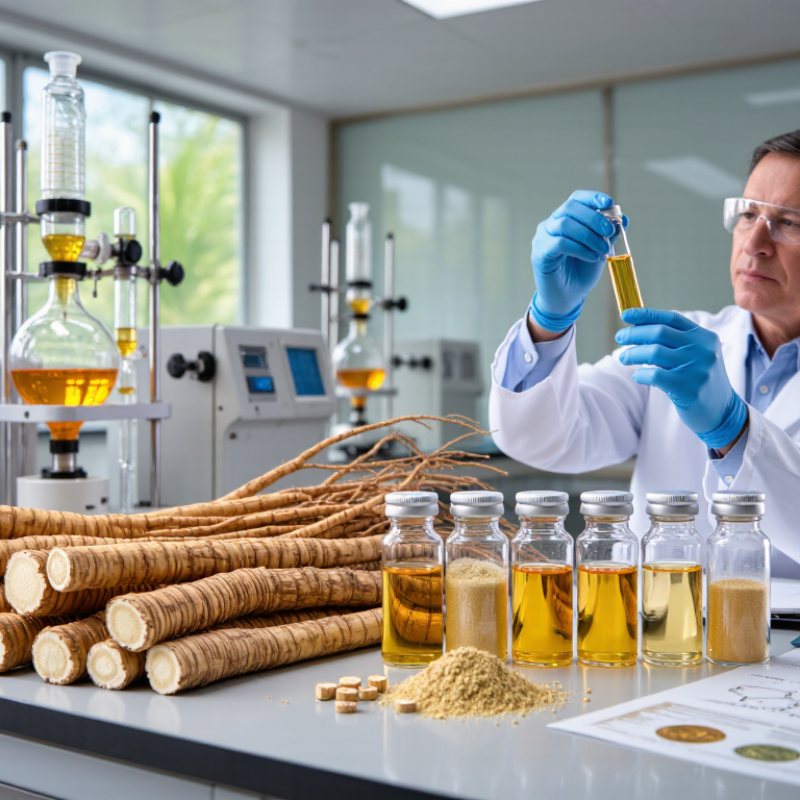
2026 Top Tongkat Ali Extract Suppliers for Global Buyers

What Tongkat Ali Extract Is and Why Global Demand Is Growing

What Tongkat Ali Extract Is and Why Global Demand Is Growing

Tongkat Ali extract comes from the roots of Eurycoma longifolia Jack, a Southeast Asian botanical. Manufacturers usually produce it through water or solvent extraction, then concentrate selected plant compounds. Product strength varies widely. Therefore, “100:1 extract” alone proves little. Buyers should request botanical identity, extraction details, marker testing, and a current certificate of analysis.

Demand is rising alongside sports nutrition, men’s wellness, and broader interest in plant-based ingredients. Grand View Research valued the global dietary supplements market at approximately USD 177.5 billion in 2023 and projected continued growth through 2030. This figure does not measure Tongkat Ali specifically. It shows the commercial environment supporting botanical ingredients. Industry estimates for Tongkat Ali differ sharply, partly because market reports use different product and regional definitions.

Quality remains the difficult part. Responsible suppliers test for heavy metals, microbes, pesticides, and undeclared pharmaceuticals. They should also provide batch traceability and stable packaging, especially for humid shipping routes. A 2021 systematic review in the Journal of the International Society of Sports Nutrition reported promising, but limited, evidence for certain performance and hormonal outcomes. The evidence is not conclusive. That matters. Global buyers should avoid dramatic claims and check destination-country requirements before purchase. In practice, a transparent specification sheet often reveals more than a polished sales forecast.

How to Evaluate Tongkat Ali Extract Suppliers in 2026

In 2026, global buyers should evaluate evidence, controls, and traceability, not attractive packaging. The CRN 2024 Consumer Survey reported that 74% of U.S. adults use dietary supplements. This demand increases pressure on Tongkat Ali extract suppliers. The WHO Global Report on Traditional and Complementary Medicine found that 88% of member states recognize traditional medicine. However, traditional use does not prove clinical efficacy.

Request the Latin name, plant part, extraction solvent, ratio, and marker compounds. A reliable supplier provides a batch-specific certificate of analysis. Verify it through an independent laboratory, preferably using HPLC or LC-MS. Test for heavy metals, pesticides, microbes, residual solvents, and undeclared adulterants. ISO 22000 or HACCP supports process control, but certification alone cannot confirm potency. Ask for three recent batch records. Inconsistent results deserve questions.

Audit harvest documentation, processing sites, subcontractors, and storage conditions. Check GMP expectations in each destination market. Ask for stability data, packaging specifications, and a clear recall procedure. Compare lead times, minimum order quantities, and change-control practices. A low price may indicate weaker testing, although not always. I would challenge unusually high eurycomanone claims because methods can produce different results. Public data on long-term human safety remains limited. Record every assumption before approval.

2026 Tongkat Ali Extract Supplier Evaluation Framework

For global buyers, supplier selection should prioritize documented quality, product consistency, regulatory readiness, and supply reliability. The chart shows a practical scoring-weight framework for comparing Tongkat Ali extract suppliers without using company or brand data.

How to use this framework: Request batch-specific certificates of analysis, verify eurycomanone standardization, review contaminant and microbiological testing, confirm GMP or equivalent manufacturing controls, and assess export documentation and delivery performance before placing an order.

Key Quality, Testing, and Certification Standards for Buyers

2026 Top Tongkat Ali Extract Suppliers for Global Buyers

Reliable Tongkat Ali extract suppliers should provide more than an attractive specification sheet. Buyers need botanical identity testing, plant-part confirmation, and a clear extraction ratio.

HPLC testing may verify key markers such as eurycomanone, but marker content alone does not prove overall quality. Each batch should include a lot-specific Certificate of Analysis, not a recycled document.

Check limits for heavy metals, microbes, pesticides, and residual solvents. Testing methods should be named and performed by a qualified laboratory.

Tips:

Request samples from the exact production lot. Compare the powder’s color, odor, solubility, and test results.

Ask for raw-material traceability, storage conditions, and shelf-life data. Certifications such as GMP, HACCP, ISO 22000, or organic status can support supplier assessment, but their scope matters.

A certificate may cover the factory, not every product. That detail is easy to miss.

Experienced buyers also review supplier change-control procedures. Changes in origin, extraction solvent, or drying temperature can affect the final profile.

Audit records, calibration logs, and contamination controls provide stronger evidence than marketing claims. Suppliers should explain whether testing is internal or outsourced and provide laboratory accreditation when available.

No document removes every risk. A perfect paper trail can still hide weak sampling, so independent verification remains sensible before a large contract.

Clear specifications should cover identity, marker range, moisture, packaging, and acceptable release limits.

How to Compare Pricing, Capacity, and International Logistics

For 2026 sourcing, compare tongkat ali extract suppliers by landed cost, not quotation alone. Prices often change with extract ratio, active-compound testing, moisture limits, packaging, and minimum order quantities. ITC Trade Map places many botanical extracts under HS 130219, making direct product comparisons difficult. Ask for a product-specific specification sheet and recent certificate of analysis. A cheaper quote may hide weaker testing.

Capacity needs practical evidence. Request monthly output, current utilization, batch size, and backup raw-material arrangements. A factory claiming large annual capacity may still lack open production slots. The 2023 World Bank Logistics Performance Index evaluates customs, infrastructure, shipment reliability, logistics competence, tracking, and timeliness. Use these categories when reviewing the supplier’s export location. Check port distance, average dispatch time, and experience with your destination market. I would also verify whether documents match the actual shipment. Small inconsistencies create expensive delays.

Tips: Compare three landed-cost scenarios. Include product, testing, inland transport, freight, insurance, duties, and inspection. Ask for air and sea options. For sensitive botanical powder, confirm moisture protection and pallet standards. Keep a 10–15% schedule buffer, because published lead times can be optimistic. This is not elegant, but it reflects real procurement. Avoid relying on one audit or one favorable sample. Supplier performance should be reviewed across several shipments, with written records for defects, delays, and corrective actions.

2026 Top Tongkat Ali Extract Suppliers for Global Buyers - How to Compare Pricing, Capacity, and International Logistics
Anonymous supplier comparison based on common commercial specifications, regional manufacturing patterns, and international procurement benchmarks
Supplier Profile Typical Origin Extract Format Standardization Options Indicative Bulk Price Typical MOQ Estimated Annual Capacity Production Lead Time Common Certifications Export Packaging International Logistics Best Fit for Buyers
Profile A
Premium botanical specialist
Malaysia or Indonesia Water or hydroalcoholic root extract; fine powder 1%, 2%, 10% eurycomanone; custom assay available US$95–180/kg for standardized extract 25–50 kg 20–50 metric tons per year 5–8 weeks GMP, HACCP, ISO 22000, Halal; batch COA 20–25 kg fiber drums or foil-lined cartons Air freight for samples and urgent orders; sea freight for commercial lots; commonly quoted FOB or CIF Premium supplements, clinical-formula development, and buyers requiring stronger traceability
Profile B
High-volume regional processor
Malaysia Spray-dried or vacuum-dried extract powder Low-to-medium assay grades, typically 1–2% eurycomanone US$55–110/kg 100–200 kg 50–150 metric tons per year 4–7 weeks GMP, HACCP, Halal, ISO 9001 or ISO 22000 25 kg multi-wall bags with inner liner Regular containerized sea freight from Southeast Asian ports; air cargo available at additional cost Large supplement manufacturers seeking stable supply and competitive unit pricing
Profile C
Specialty high-assay producer
Malaysia or Indonesia Concentrated dry extract or enriched fraction 5–10% eurycomanone; assay verification by HPLC US$160–320/kg 10–25 kg 5–20 metric tons per year 6–10 weeks GMP, ISO 22000, allergen statement, pesticide and heavy-metal testing 5–10 kg foil bags packed in fiber drums Courier or air freight is common because of lower shipment volumes; temperature-controlled transport is usually unnecessary High-potency capsules, premium blends, and products using small serving sizes
Profile D
Private-label ingredient supplier
Southeast Asia with regional contract manufacturing Standardized powder, granules, capsules, or premix 1–2% eurycomanone; formula-specific specifications US$70–145/kg equivalent for bulk powder 50–100 kg powder or 10,000–25,000 finished units 10–40 metric tons of extract per year 6–12 weeks, depending on packaging and testing GMP, HACCP, Halal; finished-product documentation varies by market Foil-lined cartons, drums, or finished retail packaging Door-to-door air and sea freight; DDP may be available for selected destinations Online brands and distributors needing ingredient supply plus finished-product support
Profile E
Cost-focused bulk processor
Indonesia or neighboring Southeast Asian markets Crude or partially standardized root extract Assay often specified by total extract ratio; eurycomanone testing may be optional US$30–75/kg 200–500 kg 100–300 metric tons per year 3–6 weeks Basic HACCP or GMP documentation; testing scope should be confirmed before purchase 25 kg kraft bags or fiber drums with liner Lowest landed cost generally achieved through full-container sea freight; longer document-review process may apply Price-sensitive manufacturers with in-house testing and formulation capabilities
Profile F
Trader and consolidation partner
Regional sourcing network in Southeast Asia Multiple extract grades sourced from qualified processors Usually 1–2% grades; higher assays subject to supplier availability US$65–135/kg 25–100 kg Dependent on contracted processor capacity 4–9 weeks Supplier-dependent; COA, SDS, origin statement, and export documents should be requested Standard export cartons or drums Useful for mixed pallets, consolidated shipments, and buyers without direct Southeast Asian logistics capabilities Small and medium-sized importers testing demand or combining several botanical ingredients
Buyer reference: Prices are indicative 2026 bulk-market ranges in US dollars per kilogram and vary according to assay level, extraction method, order size, testing requirements, packaging, payment terms, and Incoterms. Eurycomanone content, botanical identity, adulteration screening, pesticide residues, heavy metals, microbiology, and country-specific import requirements should be verified through an independent laboratory and current batch documentation before purchase.

A Step-by-Step Process for Selecting and Ordering a Supplier

For global buyers, selecting a Tongkat Ali extract supplier should begin with documented evidence, not attractive pricing. Define the required extract ratio, powder form, target market, and annual volume. Ask for a recent specification sheet and a batch-specific certificate of analysis. Check botanical identity, active markers, moisture, microbes, heavy metals, pesticides, and residual solvents. Independent laboratory testing is preferable.

Request a small sample from the same production line used for commercial orders. Compare its color, odor, solubility, and test results with the supplier’s documents. Visit the facility virtually or in person when possible. Review raw material traceability, drying controls, sanitation records, and packaging conditions. A clean warehouse matters.

Then assess commercial reliability. Confirm minimum order quantity, lead time, payment terms, Incoterms, shipping documents, and replacement procedures for nonconforming goods. Check whether the supplier can provide export paperwork and comply with the destination country’s food or supplement rules. Do not accept medical claims or vague “premium” language without evidence.

A written purchase agreement should specify testing methods, acceptance limits, packaging size, shelf life, and dispute handling. Keep retained samples from every shipment. One weakness remains easy to overlook: a perfect first batch does not guarantee consistent future supply. Recheck each lot, even after a smooth order.

FAQS

What is Tongkat Ali extract?

It is made from the roots of Eurycoma longifolia Jack, a Southeast Asian plant. Manufacturers use water or solvent extraction. They then concentrate selected plant compounds. Product strength can vary greatly.

Does a “100:1 extract” guarantee high quality?

No. The ratio alone proves very little. Ask for the plant name, root identification, extraction method, and marker testing. A current, batch-specific certificate of analysis is more useful.

What benefits are supported by current evidence?

Some studies suggest possible effects on performance or hormonal outcomes. However, the evidence remains limited and inconclusive. Traditional use does not prove clinical effectiveness. Avoid suppliers making dramatic promises.

Which documents should buyers request?

Request a specification sheet and a recent certificate of analysis. The certificate should match the exact production batch. Ask for three recent batch records. Inconsistent results need careful questioning.

Which quality tests are important?

Test for heavy metals, pesticides, microbes, moisture, and residual solvents. Check marker compounds with HPLC or LC-MS when suitable. Independent laboratory verification is preferable. Testing matters more than attractive packaging.

How can buyers check a supplier’s consistency?

Request a sample from the same production line used for commercial orders. Compare its color, odor, solubility, and laboratory results. Keep a retained sample from every shipment. One good batch is not enough.

What manufacturing and storage details deserve attention?

Review raw material traceability, drying controls, sanitation records, and warehouse conditions. Humid shipping routes require stable packaging. Ask for stability data and a recall procedure. A clean warehouse matters.

What commercial details should a purchase agreement include?

Specify testing methods, acceptance limits, package size, shelf life, and dispute handling. Confirm minimum order quantity, lead time, payment terms, and shipping documents. Clarify replacement procedures for nonconforming goods. I would not rely on verbal promises.

How should buyers manage destination-country requirements?

Check the target market’s food and supplement rules before ordering. Confirm labeling, import paperwork, testing, and permitted claims. Do not accept vague “premium” language without evidence. Compliance assumptions can be wrong.

Conclusion

This guide explains what Tongkat Ali Extract is and why demand is increasing among global buyers seeking consistent, plant-based ingredients for health and wellness products. It outlines how to evaluate suppliers in 2026 by reviewing raw material sourcing, extraction methods, product consistency, production experience, communication, and supply reliability. Buyers will also learn which quality controls, laboratory tests, documentation, and certifications can help verify identity, purity, safety, and compliance with destination-market requirements.

The article also provides a practical framework for comparing pricing, minimum order quantities, production capacity, packaging options, payment terms, shipping arrangements, and international logistics. A step-by-step supplier selection process helps buyers define specifications, request samples and documentation, assess test results, confirm commercial terms, and place orders with greater confidence. By combining transparent communication, careful due diligence, and realistic delivery planning, international purchasers can build dependable sourcing relationships for Tongkat Ali Extract while reducing quality and supply-chain risks.

Evelyn

Evelyn

Evelyn is a dedicated marketing professional with a deep expertise in the company’s product offerings. With a passion for sharing knowledge, Evelyn consistently contributes to the company’s professional blog, providing insightful articles that highlight the features and benefits of our products.......