
Discover expert analysis, scientific research, and global market trends in plant-based ingredients and dietary supplements from KNH Biotech Co., Ltd.
In-depth guides on private label manufacturing, quality standards, and botanical extract applications.
Stay informed with current market dynamics and product innovations from our R&D specialists.
Sophora Japonica Extract has become a notable botanical ingredient for nutraceutical, cosmetic, and functional food applications. Its commercial value often relates to rutin, quercetin, and other flavonoid markers. However, product quality can differ sharply between suppliers. Extraction solvent, plant part, harvest timing, and storage conditions all influence the final specification.
Industry reports from Grand View Research and MarketsandMarkets describe botanical extracts as a growing global ingredient category. Their analyses also highlight inconsistent market definitions and regional supply risks. That limitation matters. It means market size figures should guide research, not replace supplier verification. The World Health Organization’s Global Traditional Medicine Strategy 2025–2034 also stresses quality assurance, evidence-based use, and traceable supply chains.
This guide examines seven potential Sophora Japonica Extract suppliers through a practical purchasing lens. Key comparison points include botanical identification, standardized active content, HPLC testing, pesticide screening, heavy-metal limits, microbiological results, and batch-level certificates of analysis. Manufacturing controls matter too. Look for documented GMP systems, clear country-of-origin records, and responsive technical support. A polished website is not enough. Some supplier information may remain incomplete, and that weakness deserves attention rather than convenient assumptions. Buyers should request recent samples and compare them against agreed specifications. They should also confirm whether the quoted extract uses flower buds, leaves, or another plant part. The best supplier is not always the cheapest. It is the one that can repeatedly deliver identity, consistency, and usable documentation.
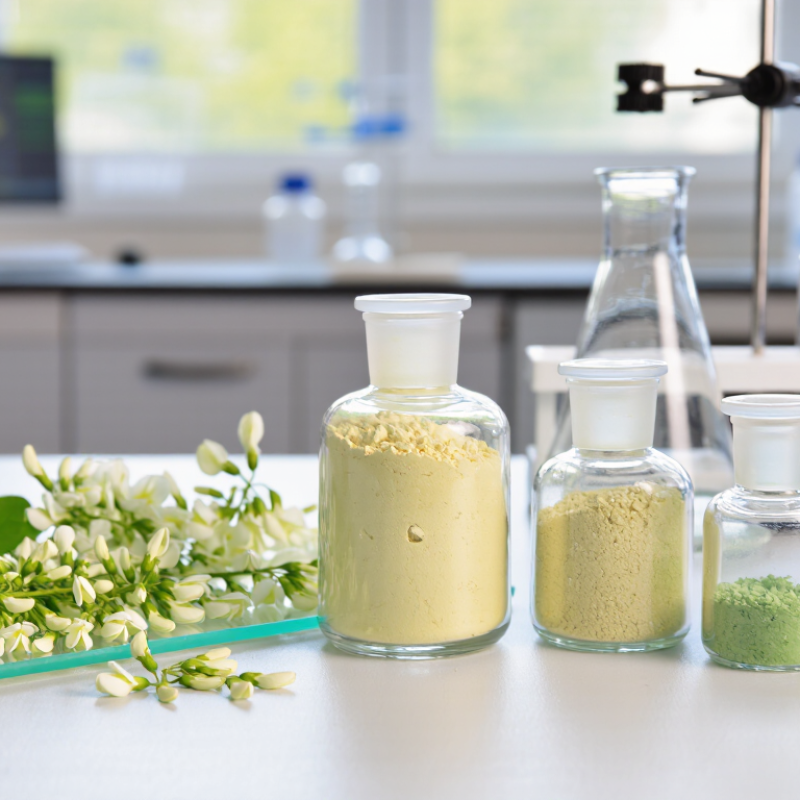
7 Best Sophora Japonica Extract Suppliers?
For Sophora japonica extract, rutin grade matters more than a polished sales sheet. Common specifications range from 50% to 95% rutin, measured by HPLC. Lower grades may suit functional beverages and cost-sensitive formulas. Higher grades fit capsules, tablets, and standardized research materials. The European Pharmacopoeia 11.0 and USP Dietary Supplements Compendium emphasize identity, assay, impurities, and contaminant testing. A dependable supplier should provide batch-specific results, not recycled certificates.
The seven strongest supplier profiles usually include growers with traceable flowers, GMP extraction plants, HPLC-standardized manufacturers, and laboratories offering custom grades. Ask for the botanical part, extraction solvent, rutin assay, moisture, residual solvents, pesticide residues, heavy metals, and microbiological limits. AOAC and ISO-based methods add credibility when laboratories disclose them clearly. Grand View Research’s 2024 botanical extracts analysis highlights standardization and traceability as major market priorities. The report does not make every supplier equally reliable. That distinction is easy to miss.
Tips: Compare three recent COAs. Check whether 50%, 70%, 80%, 90%, and 95% grades show consistent color and assay results. Request stability data under actual packaging conditions. A 95% grade is not automatically better; excessive purification may reduce yield and increase cost. I would also verify the Latin species name and harvest season. Supplier claims can look precise, yet small testing gaps still matter.
A credible ranking should begin with comparable samples, not polished websites. Request the same extract specification from all seven suppliers. Record the botanical name, plant part, extraction solvent, marker compound, and stated purity. HPLC data should show a clear chromatogram, validated test conditions, retention time, and assay result. A single percentage is not enough. Ask for the laboratory method and detection wavelength.
Review each certificate of analysis against the delivered batch number. Check moisture, heavy metals, microbial limits, residual solvents, and pesticide results. The COA should identify the testing laboratory, test dates, and approval signature. Missing details create uncertainty. I would score document consistency heavily.
However, HPLC may confirm a marker compound without proving complete botanical identity. Consider independent testing when the result seems unusually perfect.
GMP evidence should include production controls, cleaning procedures, traceability, deviation handling, and complaint records. ISO certification adds value only when its scope covers the relevant manufacturing or quality process. Verify the certificate number, issuing body, validity period, and facility address.
A simple weighted model can rank the suppliers: HPLC quality at 30%, COA reliability at 25%, GMP controls at 25%, and ISO relevance at 20%.
Keep audit notes and raw laboratory files. Some suppliers may score well on paper but respond slowly or avoid technical questions. That weakness matters. A ranking should remain open to revision when new batches, audits, or test results appear.
7 Best Sophora Japonica Extract Suppliers?
Seven Supplier Profiles: Origin, Extraction Method, MOQ, and Capacity
Supplier A sources dried flower buds from northern China and uses water extraction. Its typical MOQ is 25 kilograms, with an estimated capacity of 10 metric tons monthly. Supplier B works with Chinese plantation cooperatives and applies ethanol extraction. It usually accepts 50 kilograms and reports 15 tons monthly. Supplier C offers rutin-rich extract from controlled farms in eastern China. Spray drying follows water extraction, with a 20-kilogram MOQ and about 8 tons monthly. Supplier D processes flower buds near the growing region. Its low-temperature extraction may protect heat-sensitive compounds, but the stated capacity remains modest: 5 tons monthly. MOQ starts at 10 kilograms.
Supplier E combines water and ethanol extraction for adjustable specifications. It lists a 100-kilogram MOQ and an estimated 20-ton monthly capacity. Supplier F focuses on standardized powder and provides batch records, heavy-metal testing, and microbiological reports. Its MOQ is 25 kilograms, while capacity reaches approximately 12 tons monthly. Supplier G offers custom particle sizes and packaging. It uses water extraction, accepts 50 kilograms, and produces around 6 tons each month. Figures should be verified against current production schedules.
Tips: Ask for origin documents, extraction ratios, marker-compound assays, and recent certificates of analysis. Confirm whether capacity means installed equipment or available supply. A lower MOQ can hide higher testing or packaging costs. I would also request a pilot batch before signing a larger order. Supplier claims are useful, but they are not proof.
An anonymized comparison of origin, extraction method, minimum order quantity, and estimated annual production capacity for commercial Sophora japonica extract suppliers.
Capacity is shown in metric tonnes per year. Supplier profiles are anonymized commercial benchmarks; actual MOQ, capacity, extraction solvent, and active-marker specifications should be confirmed directly during supplier qualification.
7 Best Sophora Japonica Extract Suppliers?
Quality begins with evidence, not a polished product page. For Sophora japonica extract, request a batch-specific certificate of analysis with the lot number, test date, laboratory identity, and sampling method. A reputable ISO/IEC 17025 laboratory should test lead, arsenic, cadmium, and mercury using validated elemental analysis. USP General Chapter <2232> lists daily exposure limits of 5 micrograms for lead, 15 for inorganic arsenic, 5 for cadmium, and 15 for mercury in dietary supplements. These figures help buyers compare results, but extract-specific risk still matters.
Pesticide screening should cover organophosphates, organochlorines, pyrethroids, and locally relevant compounds. “Passes pesticides” is too vague. Ask for the reporting limit and full analyte list. WHO’s Guidelines for Assessing Quality of Herbal Medicines emphasize identity, contaminants, and traceability across the supply chain. Soil history matters. So does drying.
Microbial testing should include total aerobic count, yeast and mold, Escherichia coli, and Salmonella, following suitable pharmacopeial methods such as USP <2021> and <2022>. Check water activity when the powder feels slightly soft or clumpy. That detail can reveal storage problems. Each batch should also confirm botanical identity, extract ratio, marker compound level, moisture, and residual solvents when applicable. One overlooked weakness is sample representativeness. A perfect certificate cannot repair poor sampling. Ask for retained samples, chromatograms, deviation records, and results from at least three recent batches before approving a supplier.
A reliable supplier should provide clear purity data, not only a polished product sheet. Ask whether purity refers to total flavonoids, rutin, or another marker compound. Request recent HPLC results, batch numbers, residual solvent data, heavy metal limits, and microbiological testing. A certificate of analysis should match the exact lot you may receive. Samples help, but one sample cannot prove long-term consistency.
Price needs careful comparison. A lower quote may exclude testing, packaging, or export documents. Compare the cost per kilogram at the same assay level, then check minimum order quantities and payment terms. Lead time also matters. Ask about raw material availability, production scheduling, and typical dispatch dates. “Ready stock” can still mean several days for final inspection. That detail is easy to miss.
Certifications strengthen supplier evaluation, but their scope matters. Check GMP, ISO 9001, HACCP, organic, or other claims against current certificates and covered facilities. Do not accept logos alone. Incoterms can change the real landed cost. EXW may leave most transport duties with the buyer, while FOB, CIF, or DDP allocate costs differently. Confirm customs responsibility, insurance, port charges, and import clearance in writing. No comparison is perfect. I would keep a scoring sheet, yet still reserve a small pilot order before committing to a large purchase.
Suppliers commonly source dried flower buds from northern or eastern China. Controlled farms and plantation cooperatives may improve traceability. Origin documents still need verification.
Water extraction is widely used. Some suppliers use ethanol or combine both methods. Low-temperature extraction may better protect heat-sensitive compounds, but evidence should be checked.
Listed MOQs range from 10 to 100 kilograms. Monthly capacities range from about 5 to 20 metric tons. These figures may describe installed capacity, not available supply.
Request a batch-specific certificate of analysis with the lot number and test date. Ask for laboratory identity, sampling details, chromatograms, and retained samples. A polished product sheet is not enough.
Testing should cover lead, arsenic, cadmium, mercury, pesticides, microbes, and residual solvents. Pesticide reports should show reporting limits and complete analyte lists. “Passes pesticides” is too vague.
Check botanical identity, extraction ratio, moisture, marker-compound level, and water activity. Rutin or total flavonoids should match the stated specification. One sample cannot prove long-term consistency.
Compare cost per kilogram at the same assay level. Include testing, packaging, export documents, payment terms, and lead time. A low quote may hide additional costs.
Request a pilot batch and review results from at least three recent batches. Confirm production scheduling, dispatch dates, customs duties, insurance, and import clearance. I would still keep a scoring sheet, though it can miss practical problems.
This guide evaluates seven potential suppliers of Sophora Japonica Extract, focusing on rutin grades ranging from 50% to 95%. It explains how buyers can compare suppliers through HPLC test results, certificates of analysis (COA), GMP practices, ISO certifications, production origin, extraction methods, minimum order quantities, and manufacturing capacity. The goal is to provide a practical framework for identifying consistent quality and reliable supply rather than relying only on advertised purity.
The article also outlines essential quality and safety checks, including testing for heavy metals, pesticide residues, microbial contamination, and batch-to-batch consistency. A clear purchasing comparison covers purity, pricing, lead times, certifications, payment terms, and Incoterms. By reviewing these factors together, buyers can make informed sourcing decisions, reduce quality risks, and select a supplier that matches their technical, regulatory, and commercial requirements.