The bulk sweetener market is changing quickly. Grand View Research estimates the global allulose market could reach about USD 95.7 million in 2024. It also projects strong growth through 2030. These figures suggest rising interest in low-calorie formulation ingredients. However, market forecasts are not purchasing guarantees. Prices, supply, and regional demand can shift unexpectedly.
Buying Allulose Powder in bulk requires more than comparing the lowest quoted price. Buyers should examine purity, particle size, moisture control, packaging strength, and production consistency. A practical evaluation starts with the certificate of analysis. Check assay results, microbial limits, heavy metals, allergens, and the lot number. The package should survive a warehouse move without torn seams or hardened powder. Small details matter.
Regulatory status also deserves careful attention. The U.S. Food and Drug Administration states that allulose provides 0.4 calories per gram. Its guidance also explains how allulose may be treated in certain nutrition labeling calculations. Requirements can differ across countries, so local compliance must be verified. Ask suppliers for traceability records and current food-safety certifications. FSSC 22000, BRCGS, or equivalent systems can provide useful evidence, but certificates should be checked directly.
These ten tips focus on realistic bulk-buying decisions. They cover supplier screening, sampling, contract terms, storage, and total landed cost. Some recommendations may seem obvious. They are still often missed. No checklist is flawless. A supplier can pass an audit and still disappoint during peak season. Careful buyers leave room for testing, questions, and one uncomfortable possibility: the cheapest powder may become the most expensive choice.
Define Bulk-Grade Allulose: Purity, 70% Sweetness, and 0.2–0.4 kcal/g
Bulk-grade allulose should mean more than a large sack and a low price. It should include a clear specification for purity, sweetness, energy value, moisture, ash, and microbiological limits. Commercial powders often target high purity, commonly around 98–99.5%, but no universal bulk-grade threshold exists. Request a recent certificate of analysis for every production lot.
The sweetness matters in formulation. Technical references commonly describe allulose as approximately 70% as sweet as sucrose. A kilogram may therefore require blending with other sweeteners, especially in beverages or low-sugar bakery products.
FDA guidance on allulose labeling uses 0.4 kcal per gram, while supplier specifications may show 0.2–0.4 kcal/g. Check the testing method.
Small details matter. Powder flow, clumping, particle size, and packaging moisture barriers can affect dosing accuracy. The FDA’s guidance, GRAS notices, and food-labeling materials provide useful regulatory reference points, but they do not replace lot testing.
I would also compare sweetness in the finished recipe, not only on paper. A 70% figure is a useful starting point, yet acidity, heat, and other ingredients can change perception. That is easy to underestimate.
For larger purchases, ask for traceability records, allergen statements, heavy-metal results, and retained samples. A polished specification sheet can still hide inconsistent handling.
Check FDA GRAS Status, Labeling Rules, and Regional Compliance Requirements
When buying allulose powder in bulk, verify its FDA GRAS status before comparing prices. GRAS status depends on the intended use, purity, and safety evidence. Ask the supplier for a current specification sheet, certificate of analysis, and supporting safety documentation. Check identity, moisture, microbiological limits, and heavy metal results. A low price means little if the lot cannot pass review.
Labeling requires careful attention. In the United States, allulose may receive specific treatment in Nutrition Facts labeling under current FDA guidance. Confirm how it must appear as a carbohydrate and whether exclusions for total or added sugars apply to your product. Do not copy another package blindly. Product format matters. A drink mix, bakery ingredient, and retail pouch may need different statements, allergen controls, or usage directions.
Regional rules can change quickly. Confirm requirements in every sales market, including ingredient names, nutrition calculations, language, import documents, and permitted claims. Your customs broker or regulatory adviser should review the final label before printing. Keep batch records and supplier verification files. Small details matter.
One practical warning: suppliers may provide outdated templates. I have seen compliance checks fail because a document looked complete but lacked a current test date. Build a review checklist, then question your own assumptions. Rules are not always simple.
10 Tips for Buying Allulose Powder in Bulk
Check FDA GRAS status, labeling rules, specifications, and regional compliance requirements before placing a large order.
FDA labeling guidance uses approximately 0.4 kcal per gram for allulose, compared with 4 kcal per gram for conventional sugars. The chart shows the resulting reference values per 100 grams. Actual Nutrition Facts values depend on the finished product and serving size.
Bulk Purchasing Checklist
- Confirm that the intended use of allulose is covered by an applicable FDA GRAS notice or other lawful food-additive basis.
- Request the supplier’s specification sheet, certificate of analysis, lot number, and traceability documentation.
- Verify identity and purity testing, including allulose content, moisture, ash, and relevant contaminant limits.
- Check that the ingredient is declared by its common or usual name, “allulose,” in the finished-product ingredient list.
- Review whether the product qualifies for FDA treatment that excludes allulose from Total Sugars and Added Sugars on the Nutrition Facts label.
- Use the applicable FDA energy value for allulose only when preparing U.S. nutrition labeling; do not automatically apply it in other markets.
- Confirm allergen, cross-contact, sanitation, and foreign-material controls for the manufacturing and packing facilities.
- Check packaging, shelf-life, storage temperature, lot coding, and minimum remaining shelf-life at delivery.
- For the EU, United Kingdom, Canada, and other markets, verify local authorization, novel-food or food-additive rules, and labeling requirements separately.
- Obtain regulatory review for the final formula and claims before importing, distributing, or using the bulk powder commercially.
Reference framework: U.S. FDA food labeling provisions under 21 CFR 101.4 and 21 CFR 101.9, together with current FDA guidance on allulose and GRAS substances. U.S. GRAS status does not automatically establish compliance in another jurisdiction.
Compare COA Data: Assay, Moisture, Microbial Limits, and Heavy Metals
When buying allulose powder in bulk, treat the Certificate of Analysis (COA) as a purchasing document, not decoration. Match the COA lot number, production date, and product specification with the material offered. A recent document is useful, but it cannot automatically represent every shipment. Ask whether testing occurred internally or through an independent laboratory.
Compare assay results carefully. A high allulose assay indicates concentration, but the testing method also matters. Look for the method name, reporting basis, and acceptance range. Moisture deserves equal attention because damp powder can cake during storage and alter handling performance. Check whether moisture is measured by loss on drying or another validated procedure.
Microbial limits should show total plate count, yeast and mold, and specified pathogens when applicable. Do not accept vague wording such as “passes microbiology.” Heavy-metal data should identify lead, arsenic, cadmium, and mercury, preferably in clear units such as milligrams per kilogram. I once focused too heavily on assay and overlooked an unclear moisture method. That was a preventable mistake. Request laboratory accreditation details, sample dates, and retest policies before approving a large order. Keep a retained sample for comparison if the powder later changes color, flow, or odor.
10 Tips for Buying Allulose Powder in Bulk - Compare COA Data: Assay, Moisture, Microbial Limits, and Heavy Metals
| Tip |
COA Dimension |
Practical Buying Benchmark |
Illustrative COA Reading |
What to Verify Before Placing a Bulk Order |
| 1 |
Allulose assay |
Prefer a declared assay of 98.0% or higher on a dry-basis or clearly defined test basis. |
99.2%
Meets benchmark |
Confirm whether the result is reported on an “as-is” or dry basis. The COA should identify the analytical method and test date. |
| 2 |
Moisture or loss on drying |
A common commercial target is not more than 1.0%, subject to the agreed product specification. |
0.42%
Meets benchmark |
Lower moisture generally supports better powder flow and storage stability. Check the packaging barrier and storage conditions as well as the test result. |
| 3 |
Total plate count |
A frequently used finished-powder limit is ≤1,000 CFU/g. |
120 CFU/g
Meets benchmark |
Make sure the COA states the unit, sampling plan, laboratory method, and whether the result is a numerical count or simply reported as below the detection limit. |
| 4 |
Yeast and mold |
A commonly specified limit is ≤100 CFU/g. |
<10 CFU/g
Meets benchmark |
Compare the result with the receiving specification for your application. Humidity control during transport is important even when the manufacturing COA passes. |
| 5 |
Escherichia coli |
Typically specified as absent in 10 g for a food ingredient, subject to local and customer requirements. |
Absent in 10 g
Meets benchmark |
Check the sample amount. “Absent in 1 g” and “absent in 10 g” are not equivalent statements. |
| 6 |
Salmonella |
Typically specified as absent in 25 g for food ingredients. |
Absent in 25 g
Meets benchmark |
Require a current pathogen result linked to the production lot. Do not rely only on a generic specification sheet. |
| 7 |
Lead (Pb) |
Use a customer or regulatory limit; a conservative purchasing screen may be ≤0.5 mg/kg (ppm). |
0.08 mg/kg
Meets benchmark |
Confirm that the method is suitable for trace metals, such as ICP-MS or another validated method, and that the result is reported in mg/kg or ppm. |
| 8 |
Arsenic (As) |
A conservative commercial screen may be ≤0.5 mg/kg (ppm); applicable legal limits can vary by market. |
0.06 mg/kg
Meets benchmark |
Ask whether the result is for total arsenic or speciated arsenic. Apply the stricter requirement when the destination market or product use requires it. |
| 9 |
Cadmium (Cd) and mercury (Hg) |
Example screening values: Cd ≤0.1 mg/kg and Hg ≤0.1 mg/kg. |
Cd: 0.02 mg/kg
Hg: <0.01 mg/kg
Meets benchmark |
Request separate values for cadmium and mercury rather than a combined “heavy metals” result, because individual limits may apply. |
| 10 |
COA traceability and sampling |
The COA should include lot number, production date, test date, sample description, specification, result, method, and authorized approval. |
Lot-specific COA with matching lot number
Verify before approval |
Match the COA to the bags, pallet labels, invoice, and retained sample. For recurring purchases, consider independent testing of the first shipment and periodic verification lots. |
Note: The benchmark values above are commonly used commercial screening examples, not universal legal limits. Final acceptance criteria should be confirmed against the destination market, intended food application, customer specification, and the latest applicable regulations.
Evaluate Supplier Capacity, MOQ, Pricing, Packaging, and Delivery Terms
10 Tips for Buying Allulose Powder in Bulk
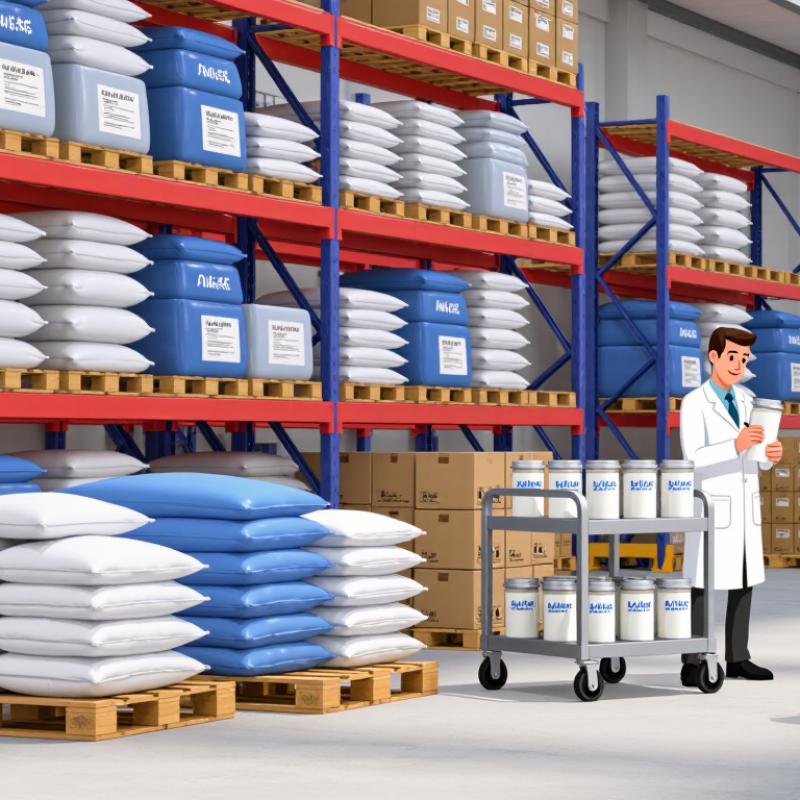
Supplier capacity matters more than a low quotation. Ask for monthly production volume, reserve capacity, and recent batch records. The supplier should explain its raw material sources and backup plans. The 2024 FAO Food Outlook highlights continuing volatility in global food supply chains. Therefore, request a written lead-time range, not one optimistic date.
Compare minimum order quantities with your actual production cycle. A 500-kilogram MOQ may reduce the unit price, but it can increase storage costs and aging risks. Request tiered pricing for 100, 500, and 1,000 kilograms. Market reports published in 2024 commonly forecast double-digit growth for the allulose market, but their estimates vary widely. Treat forecasts as signals, not guarantees. Pricing should include product, testing, freight, insurance, and customs-related charges. Hidden costs hurt.
Packaging needs practical testing. Moisture-resistant bags, sealed liners, and pallet wrapping help protect powder during transport. Ask for net weight, lot coding, shelf life, and storage temperature. FDA guidance identifies allulose at 0.4 calories per gram, while labeling rules still require careful review in each market. Delivery terms must state Incoterms, dispatch port, transit time, and responsibility for damage. A pilot order is sensible. It may feel slower, but it exposes weak packaging and inconsistent flow before a large purchase. My own purchasing bias would be price first. That is usually the mistake.
Confirm Storage Conditions, Shelf Life, Traceability, and Batch Consistency
Buying allulose powder in bulk starts with storage evidence, not a low quoted price. Ask for the supplier’s validated storage range, packaging specification, and unopened shelf-life study. The powder should arrive in sealed, food-grade liners, with no damp clumps or unusual odor. Record warehouse temperature and relative humidity. Dry storage matters because moisture can affect flow, caking, and weighing accuracy. Shelf life should come from stability data, not a generic “24 months” statement. Request results from real-time or accelerated studies, including moisture, assay, color, and microbiological limits.
Traceability must reach beyond the invoice. Each pallet should show a unique lot number, production date, country of origin, and linked certificate of analysis. Keep retained samples from every delivery. A practical receiving plan can test three separate lots before approving a large contract. Compare assay, moisture, particle size, ash, and microbiological results. A vague certificate is a warning. So is a changing test format. ISO 22005:2007 identifies lot linkage and movement records as core traceability elements. Use that framework during supplier audits.
Batch consistency also protects labeling decisions. FDA’s 2019 guidance recognizes allulose at 0.4 kcal per gram and permits specific U.S. labeling treatment. That makes analytical control important. Still, one weakness remains: laboratory values may not predict performance in your recipe. Run a small production trial. Check sweetness, dissolution, texture, and packaging behavior. I would challenge any supplier that refuses trend data across recent lots. Low price is tempting. Unverified consistency is expensive.
FAQS
It means more than a large sack and a low price. A clear specification should cover purity, sweetness, calories, moisture, ash, and microbiological limits. High-purity powders often range from 98% to 99.5%. There is no universal bulk-grade threshold.
Allulose is commonly described as about 70% as sweet as sucrose. A kilogram may need blending with another sweetener. Acidity, heat, and other ingredients can change perceived sweetness. Test the finished recipe.
Common labeling guidance uses 0.4 calories per gram. Supplier specifications may report 0.2–0.4 calories per gram. Ask which testing method produced the number. The method matters.
Check the lot number, production date, testing method, and acceptance range. Review assay, moisture, ash, particle size, and microbiological results. The certificate should match the shipment. A recent document may not represent every delivery.
Microbial data should include total plate count, yeast, mold, and applicable pathogens. Heavy-metal results should identify lead, arsenic, cadmium, and mercury. Units should be clear, such as milligrams per kilogram. “Passes microbiology” is too vague.
Moisture can cause clumping, poor flow, and inaccurate weighing. It may also affect dissolution and storage stability. Ask whether testing used loss on drying or another validated procedure. I once overlooked this detail. That was avoidable.
Store it in a dry warehouse with recorded temperature and relative humidity. Packaging should use sealed, food-grade liners and strong moisture barriers. Reject bags with damp clumps or unusual odors. Keep it dry.
Request stability data covering moisture, assay, color, and microbiological limits. Each pallet should show its lot number, production date, origin, and linked certificate. Retain samples from every delivery. Test three lots before approving a large contract. A small production trial can reveal sweetness, texture, and flow problems.
Conclusion
Buying Allulose Powder in bulk requires more than comparing prices. Start by defining the quality you need, including suitable purity, approximately 70% of the sweetness of sugar, and a low energy value of about 0.2–0.4 kcal per gram. Before placing an order, verify its regulatory status, labeling requirements, and compliance with the rules of every market where the product will be sold or used.
A reliable purchasing review should include a detailed Certificate of Analysis (COA) covering assay, moisture, microbial limits, and heavy metals. Assess the supplier’s production capacity, minimum order quantity, pricing structure, packaging options, lead times, and delivery terms. You should also confirm proper storage conditions, expected shelf life, batch traceability, and consistency between production lots. Clear documentation and effective quality controls can help reduce supply risks and ensure that the bulk ingredient performs consistently in food, beverage, or formulation applications.